An initiative of research and advocacy on India's free-living dogs — animals who belong to no one, coexist with everyone, and offer what laboratory studies cannot: dogs living on their own terms.
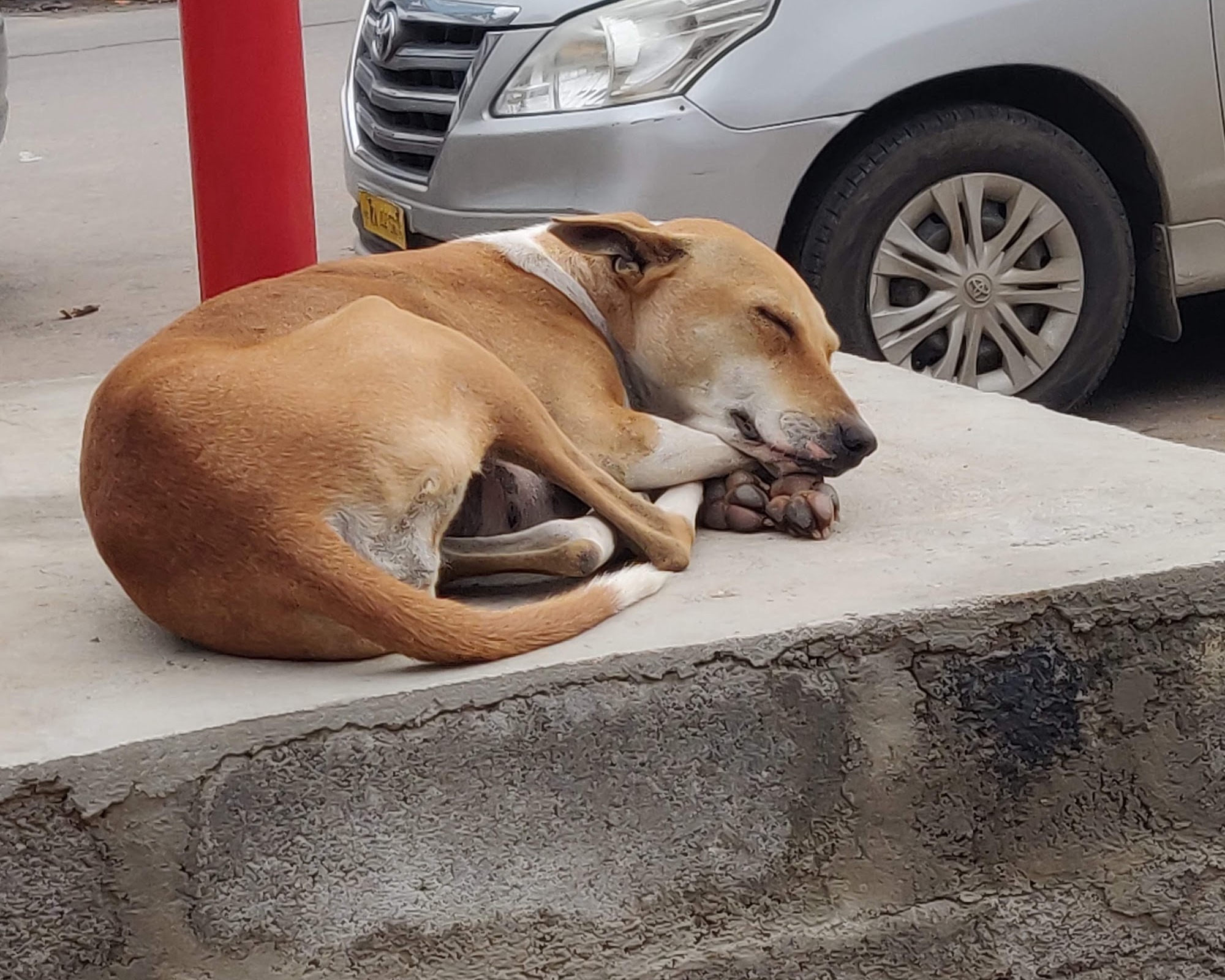
It can be observed, written down, and taught. That is what Lives of Streeties does: years of close watching in the streets and farmlands where these dogs actually live, published openly, and carried into what BHARCS teaches.
We do not start from a theory and look for dogs to fit it. We start with particular dogs — Chaita, Cheeru, Elvis, the Farmies — followed for years, and let them set the questions. Free to read in the Library.
We run our own ethological studies of free-living dogs, and we back what we say with published work — ours and other people's. What we claim, we are willing to publish and have checked. The research.
Rescuers and feeders know things no study has recorded. We train them in safe handling, connect them to each other so their work goes further, and take what they have learned into the knowledge we build. It goes both ways.
Did you know that free-living dogs are part of the ecosystems they live in? Seven minutes on what that means, and how to manage this part of the ecosystem.
A practice-informed, living framework for reducing conflict between humans and free-living dogs through behavioural and environmental regulation — six underlying principles and nine core interventions spanning food, sleep, space, triggers, human behaviour, environment and health. It evolves through field practice, is formally versioned, and carries an annexure on what is and is not "aggression."
A textbook for school communities, written for the teachers who stand between children and the animals they share a street with.
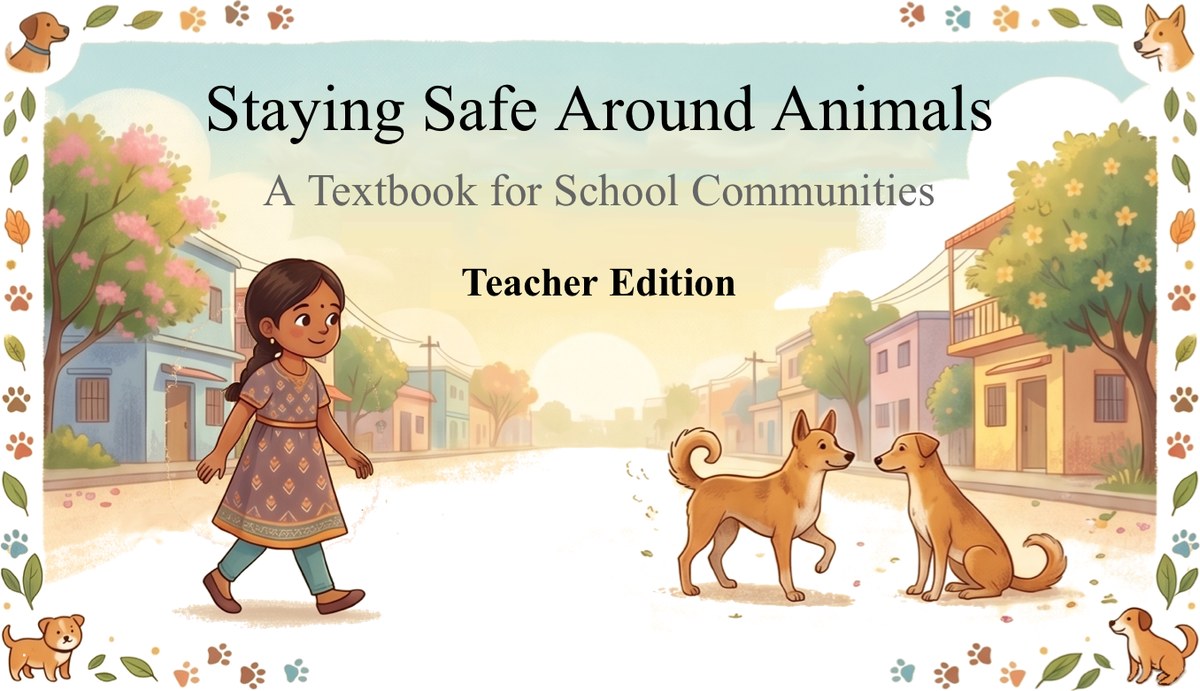
Five parts across sixteen chapters: how animals communicate before conflict, how human behaviour shapes safety, what to do when an animal approaches, first response after an injury, and a set of classroom resources — games, rhymes, posters and take-home handouts.
It does not teach children to approach or handle unfamiliar animals. It teaches calm decision-making and conflict prevention.
In the light of the Supreme Court order of November 2025, a literature review co-authored with leading scientists and welfare experts sets out why removing free-living dogs is scientifically, legally and ethically unsound — and why the indigenous ABC-ARV programme should be strengthened, not disrupted. The primary documents are free to download and reuse.
Years of close observation, written up as field stories and arguments. The complete archive lives in the Library.
The distinction that reframes the whole conversation.
Read →Feeders and caregivers as frontline rabies control.
Read →How free-living dogs mediate human–wildlife conflict.
Read →Beyond the quick fix.
Read →A street dog's journey, in three chapters.
Read →The free-living dogs of the BHARCS field site.
Read →Friendship and preference among the Farmies.
Read →On animal minds and temperament.
Read →A live, critical seminar on canine ethology, policy and human–animal relationships — for professionals ready to examine their own assumptions. Not a course; a shift in how you see.
If you can't be a caregiver yourself, real people and organisations are doing this work every day — feeding, sheltering and providing medical care for free-living dogs. Consider supporting them directly.
 BHARCS